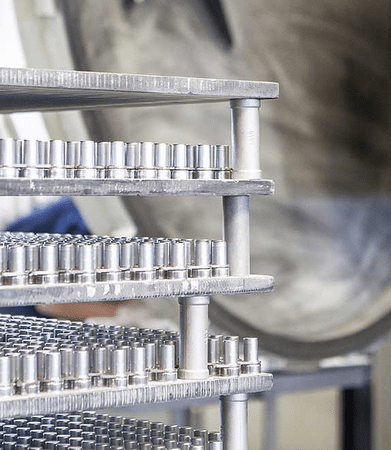
The future of metal joining HD Brazing technology
In the rapidly evolving world of metal fabrication, innovative techniques are constantly emerging to meet the demands of various industries. One such groundbreaking method that has gained significant attention is HD Brazing. This advanced joining process offers a range of benefits that traditional welding and brazing methods simply cannot match. As we delve into the intricacies of HD Brazing, it becomes clear why this technology is poised to revolutionize the metal joining industry.
The science behind HD Brazing
HD Brazing, short for High-Definition Brazing, is a sophisticated process that combines the principles of traditional brazing with cutting-edge technology. This method utilizes precise temperature control and specialized alloys to create strong, durable bonds between metal components. Unlike conventional welding, HD Brazing does not melt the base metals, resulting in less distortion and a more aesthetically pleasing finish.
The process involves heating the metal components to a specific temperature range, typically between 450°C and 1200°C, depending on the materials being joined. A filler metal with a lower melting point than the base metals is then introduced, which flows into the joint through capillary action. As the assembly cools, a strong metallurgical bond is formed, creating a seamless connection between the parts.
Advantages of HD Brazing over traditional methods
HD Brazing offers numerous advantages over traditional joining methods, making it an attractive option for a wide range of applications. Some key benefits include:
- Improved strength: HD Brazed joints often exhibit superior strength compared to welded joints, particularly in applications involving dissimilar metals.
- Reduced distortion: the lower temperatures used in HD Brazing result in minimal thermal distortion, preserving the integrity of the base metals.
- Enhanced aesthetics: the process produces clean, smooth joints that require little to no post-processing, saving time and resources.
- Versatility: HD Brazing can be used to join a variety of metals and alloys, including those that are difficult to weld.
Applications across industries
The versatility and efficiency of HD Brazing have led to its adoption across various industries. From aerospace and automotive to electronics and medical devices, this technology is proving invaluable in creating high-quality, reliable metal joints. For example, in the automotive industry, HD Brazing is used to manufacture lightweight yet strong components, contributing to improved fuel efficiency and vehicle performance.
In the aerospace sector, HD Brazing plays a crucial role in creating complex assemblies that must withstand extreme conditions. The technology’s ability to join dissimilar metals with minimal distortion makes it ideal for producing critical components such as heat exchangers and turbine parts.
For those interested in learning more about HD Brazing and its applications, hdbrazing.com offers comprehensive information and resources. This website serves as a valuable platform for industry professionals and curious individuals alike to explore the potential of this innovative joining technique.
As industries continue to push the boundaries of what is possible in metal fabrication, HD Brazing stands out as a technology that offers both precision and versatility. Its ability to create strong, aesthetically pleasing joints while minimizing thermal distortion makes it an invaluable tool for engineers and manufacturers across various sectors. As research and development in this field progress, it is clear that HD Brazing will play an increasingly important role in shaping the future of metal joining technology.


